
Recent News
Beyond the short-term disruptions caused by geopolitical conflicts: The entry rules reshape the core logic of China’s energy storage exports.Latest international news on photovoltaics 3.9The Lanterns Have Faded, But Our Drive is Brighter Than Ever: We’re Back!High-pressure energy storage project: Iraq, Tuz Khurmatu,250kw;February 2026Shipped from Baghdad warehouse to ESSOLAR 2026.2.3
Beyond the short-term disruptions caused by geopolitical conflicts: The entry rules reshape the core logic of China’s energy storage exports.
March 23, 2026 News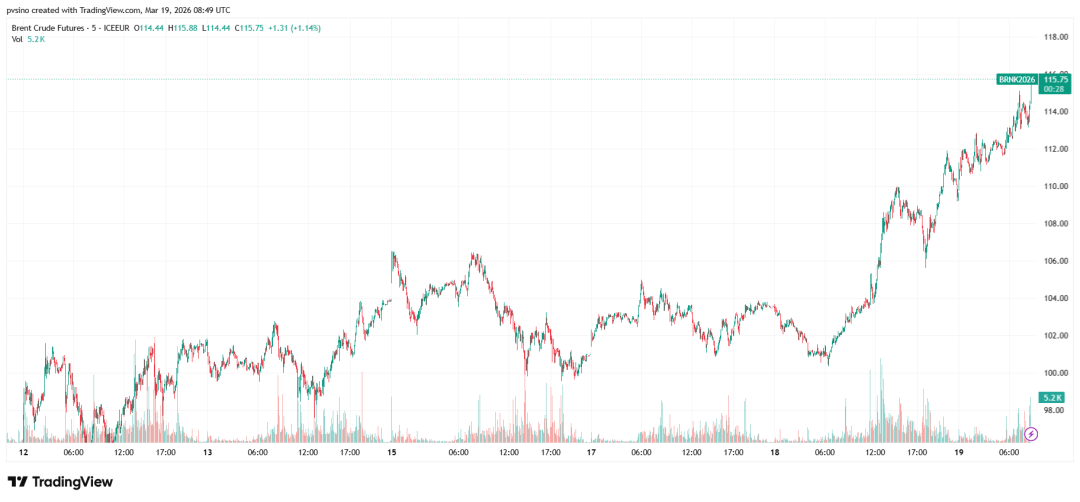
The prevailing theories surrounding the US-Israel-Iraq conflict currently focus mainly on the fact that the geopolitical tensions drive up energy prices, thereby benefiting the demand for energy storage. While this theory is not entirely without merit, when we examine the Chinese lithium battery energy storage industry, especially the export business targeting the public utility markets in Europe and the United States, the war itself is not the sole or even the primary variable determining the success or failure of a business. What truly reshapes the competitive landscape is the fluctuations in energy prices, financing expectations, and shipping insurance caused by the geopolitical conflicts, coupled with the deep integration of these factors with the local industrial policies, tax incentives, and supply chain review systems in Europe and the United States. [1][2] ([Reuters][1])
I. Transmission Mechanism of Geopolitical Conflicts: From Energy Security Anxiety to Revaluation of Energy Storage Assets
The escalation of the situation in the Middle East since March 2026 has gone beyond the emotional level of geopolitical risks and has actually reached the energy infrastructure in the Gulf region. According to Reuters, the price of Brent crude oil once exceeded $115 per barrel. The core concern in the market lies in the damage to oil and gas facilities, the obstruction of Gulf exports, and the resulting global inflationary pressure, rather than just short-term speculative behavior. [1] For utility-scale energy storage, this event reveals a clear economic logic: The volatility of wholesale prices of natural gas and electricity will directly drive a revaluation of the commercial value of energy storage in peak shaving and valley filling, auxiliary services, capacity substitution, and enhancing grid resilience. In other words, the war itself does not automatically translate into orders for Chinese enterprises, but it has significantly strengthened the strategic position of energy storage as an "energy security asset", providing macro-level support for industry demand. [1] ([Reuters][1])
The dynamics of the European market provide empirical evidence for this. A Reuters analysis on March 19th pointed out that economies with high dependence on natural gas, such as Italy, Hungary, and Romania, experienced significantly faster increases in wholesale electricity prices in 2026 compared to other regions in Western Europe. The European benchmark natural gas price rose by approximately 65% month-on-month, while natural gas still accounted for a relatively high proportion in the electricity mix of these countries. [2] This indicates that for utility-scale energy storage project developers, public utility companies, and grid operators in Europe, the role of energy storage is shifting from "a supporting device for new energy" to "a key infrastructure for mitigating gas price shocks and enhancing system resilience". From the perspective of the demand side, this trend strengthens the investment logic for pre-grid energy storage and brings long-term benefits to Chinese energy storage enterprises. [2] ([Reuters][2])
II. European Market: Expanding Demand Faces Upgraded Institutional Access Barriers
The European energy storage market has entered a stage of large-scale growth. According to industry data cited by Reuters in late February 2026, the deployment of battery storage in the EU increased by 45% in 2025, reaching 27.1 GWh, with more than half coming from utility-scale projects; Germany, Italy, and the United Kingdom continue to be the most highly regarded public utility-level energy storage investment markets. [3] This indicates that Europe is now a mature market in the expansion phase, transitioning from demonstration projects to infrastructure assetization. For Chinese enterprises, the core challenge has shifted from "market access" to "how to obtain projects with higher bank financing capabilities and local service capabilities". [3] ([Reuters][3])
However, as demand increases, the institutional thresholds are also rising simultaneously. Although Europe has a practical reliance on China's supply chain, Chinese battery manufacturers are still regarded as a source of "reliable, low-cost, and verified products" [3]. However, the regulatory framework in the European Union is undergoing rapid changes. The EU Battery Regulation explicitly requires the sustainability of the entire battery life cycle, covering carbon footprint, recycling content, due diligence, and information disclosure; among them, for industrial batteries and electric vehicle batteries with a capacity greater than 2 kWh, the mandatory battery passport requirement will be fully implemented starting from February 18, 2027. [4] This means that in the European market, the competition among enterprises is no longer just about single battery compartments or systems, but rather a complete product system that integrates carbon footprint, traceability, compliance documents, operation and maintenance capabilities, and responsibility definition. [4] ([EUR-Lex][4])
This trend is continuing to strengthen. The EU's "Net Zero Industry Act" has institutionalized the "non-price factors" system, requiring that sustainability, resilience, cybersecurity, and other standards be considered in public procurement, auctions, and support programs, rather than merely based on the lowest price. [5] On March 4, 2026, the European Commission further proposed new industry measures, intending to introduce "EU Made" and/or low-carbon requirements in public procurement and support programs to boost the demand for domestic clean technology products. [6] For Chinese enterprises, this means that the European market is not closed, but its entry threshold has been upgraded from a "price threshold" to a "systemic threshold". Whether they can complete local certification, local after-sales, local project financing language, and local delivery system will determine whether the enterprise can continuously obtain opportunities; if Europe is still regarded as a simple price competition market, it will face increasingly severe challenges. [5][6] ([Domestic Trade, Industry, Entrepreneurship and Small and Medium-sized Enterprises][5])
III. The US Market: Structural Entry Contraction under High-Growth Demand Conditions
Unlike the "increased demand but refined rules" characteristic of the European market, the US market presents a situation where "highly active demand coexists with a narrower access path". From the demand side, the levelized energy storage in the US public utilities sector remains in a highly active cycle. Reuters, citing data from Wood Mackenzie, predicts that the new installed capacity of utility-scale energy storage in the US will reach 16.2 GW in 2025, an increase of 49%, mainly driven by the growth of data center loads, the trend of electrification, and the rising proportion of renewable energy in the system, which brings about the demand for system regulation. [7] The US Internal Revenue Service also clearly stated that after the operation date of December 31, 2024, the energy storage technologies can apply for clean power investment tax credits, and eligible projects can also enjoy a domestic content bonus. [8] From the perspective of market capacity and revenue logic alone, the outlook for energy storage in the US is optimistic. [7][8] ([Reuters][6])
However, the core obstacle faced by Chinese enterprises lies in whether they can enter the market in a "compliant and tax-incentive accessible" manner. The US Trade Representative Office has clearly stated in 2024 that the 301 tariff rate on "non-electric vehicle lithium-ion batteries" in China will be raised to 25% in 2026. [9] At the same time, Reuters, citing industry reports, pointed out that starting from 2026, if US energy storage projects want to obtain investment tax credits, they need to comply with stricter regulations regarding foreign concern entities. The proportion of materials from such entities in the project cost will gradually be tightened, and China is the main target. [7] This means that the constraints in the US market have shifted from "cost competitiveness" to "whether it can be included in the tax incentive framework". For utility-scale projects, once they cannot obtain ITC, their capital structure, internal rate of return, and bidding capabilities will undergo fundamental changes; developers, to avoid affecting their tax eligibility, will actively adjust their procurement portfolios. [7][9] ([Reuters][6])
This has led to a significant differentiation trend: Geopolitical conflicts have strengthened the United States' emphasis on energy security and grid resilience, theoretically increasing the demand for energy storage; however, the newly added security concerns will not naturally translate into orders from Chinese enterprises. Instead, they are more likely to be taken on by domestic manufacturing in the United States, South Korea, and other non-Chinese supply chains. Reuters has pointed out this trend: In the future, developers will increasingly adopt a "domestic manufacturing in the United States, overseas manufacturing by non-China companies, and Chinese sources" three-track parallel procurement strategy, and domestic production capacity is also accelerating its expansion. [7] In other words, the public utility-level energy storage market in the United States for Chinese enterprises is not simply a matter of "boom or bust", but presents a structural feature of "industry continuous growth, but the direct export opportunities for Chinese enterprises to complete the package are trending towards contraction". [7] ([Reuters][6])
IV. Paradigm Shift in Business Strategies: From Price Competition to Systematic and Predictable Supply
From the perspective of marketing and business strategy, the above analysis reveals a core fact that is often overlooked: Geopolitical conflicts do not automatically generate tangible sales. Their essence lies in changing customers' risk preferences and decision-making frameworks. In Europe, customers have increased willingness to pay for energy storage due to fluctuations in gas prices and concerns over energy security. However, at the same time, their requirements for the solvency, compliance, and depth of local services of suppliers have also risen simultaneously. In the United States, customers also place greater emphasis on energy storage, but their purchasing decisions will prioritize supply solutions that do not harm tax eligibility, meet local content requirements, and comply with FEOC rules.
Therefore, Chinese energy storage enterprises urgently need to adjust not only their pricing strategies, but also their value narratives and sales organizational models. In the past, the core competitiveness of the industry lay in "cost advantage, delivery speed, and project performance"; the truly effective competitive barriers in the future will transform into "the solution being more easily accepted by insurance, passing audits, adapting to tax structures, obtaining recognition from project financing banks, meeting non-price requirements in public procurement or support systems". The essence of this transformation is to shift from selling equipment to providing a feasible and systematic certainty that can be implemented - that is, a risk-return solution that can be accepted by customers, governments, banks and insurance companies together. [5][6][7][8] ([Domestic Trade, Industry, Entrepreneurship and Small and Medium-sized Enterprises][5])
V. Conclusion
In conclusion, the actual impact of the Middle East conflict on the overseas expansion of Chinese energy storage is not simply to expand the opportunity windows for all enterprises, but to accelerate the emergence of the deep-seated reality in the industry: The key variables determining the success or failure of Chinese energy storage enterprises in the overseas market in the future are shifting from the unit watt-hour price to whether they can build and deliver a complete solution with systematic certainty in a complex environment of rising geopolitical risks and increased institutional thresholds. In the short term, Europe remains a relatively more worthy focus for the public utility-level market due to its strengthened demand logic, expanded market size, and the actual reliance on China's supply chain; however, enterprises must accept the "institutional market" attribute, and the entry cost will continue to rise, and the marginal effectiveness of the low-price strategy will decrease. [3][4][5][6] The United States remains one of the most important public utility-level energy storage markets in the world, but Chinese enterprises are more likely to participate indirectly through local manufacturing, cooperative assembly, technology licensing, software and system capability output, etc., rather than relying solely on direct package exports of China's domestic production capacity. [7][8][9] ([Reuters][3])
RELATED POSTS
-

Ningbo Jing Hong Energy Technology Co., Ltd.
Room 205, 2nd Floor, Building 3, No. 128,Jingyuan Road, Ningbo High-tech Zone,Zhejiang ProvinceA Tech Power B.V.
VAT ID: NL865234759B01
Grevelingenhout 45, 4311NL, Bruinisse, the Netherlands
©2023 wpboss.cn, wordpress theme designer