
Recent News
Regulatory climate for battery energy storage systems and data centers in the United States heats up: New zoning rules and suspension orders are being introduced in a flurryOverseas power stations have been experiencing consecutive fires, and the safety of energy storage is undergoing a major test!The global cost of storing one kilowatt-hour of electricity for four hours (LCOE) is lower than that of gas peak shaving. The energy economic landscape has witnessed a structural shift.Rooted in the core heartland of Central Asia, how can Chinese enterprises tap into the market of Uzbekistan?2026 Outlook for Sodium-Ion Batteries: Growing Development Momentum
Regulatory climate for battery energy storage systems and data centers in the United States heats up: New zoning rules and suspension orders are being introduced in a flurry
November 9, 2026 NewsAccording to foreign media reports, from the Midwest of the United States to New York State, local and state governments are introducing new zoning rules and restrictions concerning battery energy storage systems and data center projects.
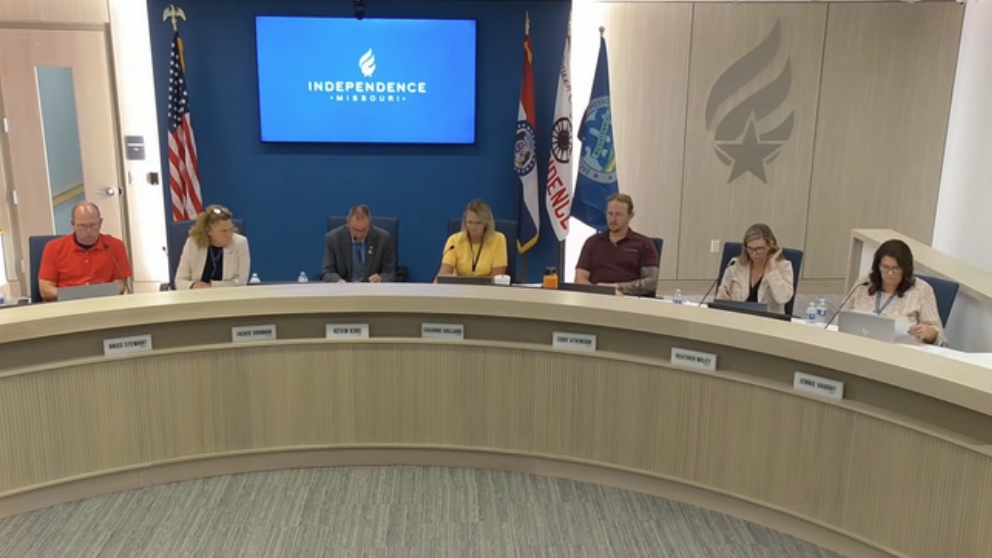
On October 5th, the City Council of Independence, Missouri approved new zoning requirements for data centers and battery energy storage systems.
Virginia approved regulations for battery energy storage systems
On October 13th, the Board of Supervisors (BoS) of Washington County, Virginia approved a regulation for battery energy storage systems, imposing restrictions on the location of related facilities.
The Board of Supervisors requested to recompile the regulations on zoning for battery energy storage systems in Virginia to "incorporate the purpose, applicability, limitations, and requirements of battery energy storage systems."
This restriction mainly applies to secondary battery energy storage systems with an energy storage capacity of more than 600 kWh. Such systems are more likely to serve data center projects.
From the Midwest of the United States to New York State, local and state governments are introducing new zoning rules and restriction measures concerning battery energy storage systems and data center projects.
Therefore, battery energy storage systems will only be permitted to be built in manufacturing areas; any energy storage projects that start construction without approval will be halted.
It is worth noting that Virginia has the most concentrated data centers in the world; in January this year, the state also proposed legislation to promote investment in battery energy storage systems.
Enoplia, Kansas: Public Referendum on Restrictions on Data Centers and Battery Energy Storage Systems
Voters in Enoplia, Kansas will make a decision on two voting issues related to data centers and certain restrictions on battery energy storage systems on November 3rd.
According to the local news media "Enoplia Gazette", these suggestions appear in questions 2 and 3. Question 2 asks voters to decide whether to prohibit the construction, installation, operation, and maintenance of data centers in all zoning areas of Enoplia. Question 3 involves whether to prohibit the construction, installation, operation, and maintenance of secondary and tertiary battery energy storage systems throughout the city.
These two proposals will not take effect immediately because the Independence City Council still needs to handle legal issues related to the proposals. The "Enoplia Gazette" pointed out that the proposals cited provisions that do not exist in the current city regulations. Therefore, even if these measures are approved in the election, the implementation of penalties remains unclear.
In 2025, officials in Harvey County, Kansas imposed a two-and-a-half-year ban on the deployment of battery energy storage systems.
Missouri approved new zoning requirements
On October 5th, the City Council of Independence, Missouri approved new zoning requirements for data centers and battery energy storage systems within the city.
Previously, Independence City had taken a series of actions and discussions regarding data centers and battery energy storage systems. In July, Independence City approved a 180-day suspension order for battery energy storage systems and data center projects within the city.
This occurred after the artificial intelligence data center park of Dutch developer Nebius broke ground in May, despite strong opposition from community residents.
The latest decision of the Independence City Council requires the development of data centers and battery energy storage systems, including maintaining a distance from residential and public spaces, noise impact assessment, retirement plan, and generator compliance reports; data centers with a scale larger than 2.5MW must also apply for special use permits from the city.
In September, utility company Ameren Missouri updated its Integrated Resource Plan (IRP) and proposed a 20-year energy roadmap, including expanding the deployment scale of battery energy storage systems, aiming to reach 2,400MW by 2030.
Michigan reviews NexAmp's battery energy storage project site planning application
On October 14th, the Zoning Board of Appeals (ZBA) in Lansing, Michigan will hear the presentation made by the American solar and energy storage developer NexAmp regarding its battery storage project site planning application.
According to the meeting agenda, NexAmp has applied for a regional change permit, proposing to install 10-foot-high soundproof fences around 6 Tesla Megapack battery storage units for a 5MW/23.5MWh battery storage system. The fences are intended to provide safety protection, shading, and noise reduction for the 9-foot-2-inch high battery storage units.
NexAmp stated that it needs to obtain the exemption from Article 4 of Section 270-24 of the zoning regulations of Lansing Town, which stipulates that all zones and locations can have a maximum height of 6 feet for fences and walls.
In August, the South Korean battery giant LG ES Company's lithium iron phosphate (LFP) battery and nickel manganese cobalt (NMC) ternary lithium battery factory in Lansing was put into operation.
Kansas approves data center zoning regulations
On October 13th, the Board of Supervisors of Kuster County approved the data center zoning regulations and imposed a 12-month suspension order on battery storage systems.
According to local news media KRVN, the Board of Supervisors of Kuster County passed Resolution 77Z-26, introducing Section 7.21 of the zoning rules of Kuster County to regulate the site selection, construction, operation, maintenance, and eventual retirement of data centers. These rules cover the relevant impacts on farmland, groundwater, noise, lighting, transportation, utilities, and emergency response.
Meanwhile, the Board of Supervisors of Kuster County also passed Resolution 78Z-26 to impose a 12-month suspension order on new battery storage system deployments or expansions in the county.
This suspension order is based on concerns regarding fire safety, emergency response, power infrastructure, land use, noise, and retirement, so that Kuster County officials can review state and federal rules and communicate with relevant agencies and emergency personnel before drafting appropriate zoning standards.
The new amendment also requires data centers with peak power demand of 10MW or more to sign community benefit agreements, which is consistent with Nebraska law; Kuster County retains the discretion to extend this requirement to smaller sites.
These agreements may cover road and infrastructure upgrades, emergency response funds, public safety training, utility mitigation, and environmental monitoring.
If a data center is continuously out of operation for 12 months, it will be classified as abandoned; however, short-term testing, maintenance, emergency work, or minimal activities do not affect the determination. Once classified as abandoned, the data center site must be retired in accordance with the approved plan and restored to harmony with the surrounding environment.
Recently in Kansas, thermal energy storage (TES) technology provider Antora Energy Company announced a 5.8GWh "multi-day" thermal energy storage project at Pratt Energy's biorefinery in Pratt City.
New York State Kingston approves battery storage system working group
On October 6th, the Kingston City Council of New York State approved the establishment of a working group to draft zoning rules related to battery storage systems.
The Kingston City Council hopes to add an environmental professional member to the working group. This decision was unanimously approved. The Kingston City Council pointed out that the current city regulations were not considered when they were formulated; the working group will use 6 months to draft appropriate regulations for the city.
New York State has the highest number of battery storage system suspension orders in the United States; earlier this year, renewable energy service provider Carina Energy Company pointed out that the state has at least 97 suspension orders in effect. Westchester County has the most effective suspension orders, followed by Shadockau County, and Erie County is third. Overall, among the 62 counties in New York State, currently 35 have at least one valid moratorium order in place.
New York State Governor Kathy Hochul also issued a statewide data center moratorium order in July this year.
RELATED POSTS
-

Ningbo Jing Hong Energy Technology Co., Ltd.
Room 205, 2nd Floor, Building 3, No. 128,Jingyuan Road, Ningbo High-tech Zone,Zhejiang ProvinceA Tech Power B.V.
VAT ID: NL865234759B01
Grevelingenhout 45, 4311NL, Bruinisse, the Netherlands
©2023 wpboss.cn, wordpress theme designer